


Shadow Root vs. Root Smudge: Low-Maintenance Color for Busy Houstonians
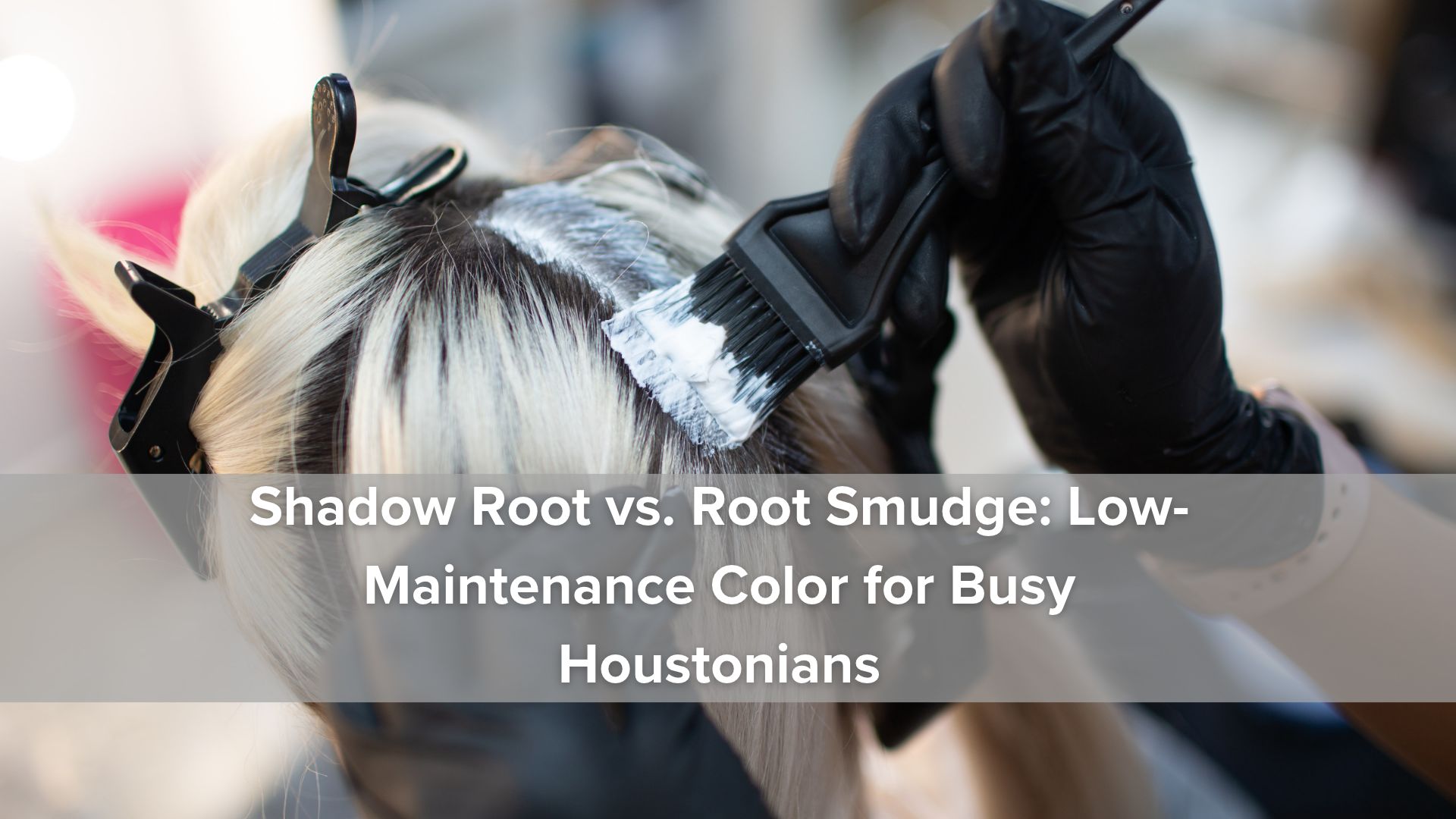
When your calendar is packed, a sharp line of regrowth at your part can feel like one more thing to manage. A shadow root or a root smudge can help. Both techniques blend the color at your roots so new growth looks softer and less obvious as it comes in.
These are two of the most common requests we hear from busy clients at our Houston salon. When your days are full and long summers make you want to spend less time fussing with your hair, low-maintenance color makes a lot of sense.
The two terms often get used interchangeably, but they usually describe slightly different looks. Here’s how they compare.
What Is a Shadow Root?
A shadow root is a deeper shade applied at the root area and blended down into lighter lengths. It’s usually most noticeable on blondes and lightened hair, where the darker root creates visible depth at the top of the head.
In most cases, a shadow root is a deliberate part of the look. The deeper tone is often close to your natural color, or a shade near it, and it may extend a little further down the hair shaft. The result is a lived-in, dimensional finish where the root is meant to be seen.
Many clients pair a shadow root with blonde or balayage color so the lighter ends feel intentional and the grow-out is gentler. If you like that soft, lived-in effect, our post on dirty blonde hair color shows how depth at the root can keep blonde from looking too bright.
What Is a Root Smudge?
A root smudge is typically a softer, more subtle technique. The goal is to blur the line where your root color meets your highlights or lightened hair, so there’s no harsh stop between the two.
A root smudge usually sits closer to the scalp and uses a tone that bridges your natural color and your lighter pieces. Its main job is to make the transition look seamless. Many people won’t notice it on its own. They’ll simply notice that your color looks blended.
Stylists often add a root smudge after highlights to soften the placement near the part.
Shadow Root vs. Root Smudge: The Main Differences
The terms aren’t fixed definitions, and different stylists may use them a little differently. In general, here’s how they tend to compare.
- Visibility: a shadow root is usually a more noticeable, rooted look. A root smudge is usually meant to be barely there.
- Depth: a shadow root often uses a deeper shade that creates clear contrast with the lengths. A root smudge typically uses a closer tone to soften the line.
- Placement: a shadow root may extend further down from the scalp. A root smudge often stays tight to the root.
- Purpose: a shadow root is part of the overall style. A root smudge mainly helps your color blend.
The best way to choose is to bring photos to your consultation and talk through how visible you want the root to be.
Who Each Technique Suits
A shadow root may suit you if
- You’re blonde or have lightened hair and want more depth.
- You like a lived-in, slightly undone look.
- You want lighter ends without needing your roots to match them.
- Your natural color is noticeably darker than your lengths.
A root smudge may suit you if
- You already have highlights you love and want them to blend better at the part.
- You prefer a subtle change that most people won’t spot.
- Your natural color is fairly close to your highlighted shade.
- You want to keep a brighter overall look while softening the root line.
Both options can work on many hair colors. Your stylist will consider your natural shade, your current color and your hair’s condition before recommending one. You can learn more about our approach on our hair color services page.
How a Soft Root Helps With Regrowth 

With traditional all-over color or highlights placed right up to the scalp, new growth can show as a clear line once your hair grows out. That’s often what sends people back to the salon sooner than they’d like.
A shadow root or root smudge changes how that grow-out looks. Because the root area is already a softer or deeper tone, new growth can blend into it more naturally. The line between old color and new growth is less obvious.
That can give you more flexibility between appointments. How long you can comfortably go between visits depends on your natural color, how fast your hair grows, how much contrast you have and your own comfort level. Your stylist can help you plan a schedule that suits your hair.
A soft root is a good fit for many people, but it isn’t designed for full grey coverage. If grey coverage is your main goal, talk with your stylist about the options that make sense for you.
Keeping Your Color Fresh in Houston
Your lengths still need care in our climate.
- Protect from the sun. Strong Houston sun can shift the tone of lighter hair. A hat on long days outdoors can help.
- Use color-safe products. Our stylists can recommend options from the Kerastase, Kevin Murphy, Oribe and Shu Uemura lines we carry. If you prefer to avoid parabens and sulfates, Kevin Murphy’s line is paraben- and sulfate-free.
- Manage humidity. Frizz can make color look dull. A smoothing styler helps, and a Brazilian Blowout or keratin treatment may be worth discussing if frizz is a daily issue.
- Mind your water. If your home has hard water, mineral buildup can affect how your color looks.
For more ideas, read our guide on how to maintain your hair color between appointments.
Frequently Asked Questions
Is a shadow root the same as a root smudge?
They’re similar, and the terms are sometimes used interchangeably. A shadow root usually describes a deeper, more noticeable rooted shade, while a root smudge is usually a softer blur at the root line.
Can I get a shadow root if I’m not blonde?
Often, yes. A shadow root shows most on lighter hair, but it can add depth to highlighted brunettes and other shades too. Your stylist can tell you how it would look on your hair.
Will a root smudge cover my grey?
A root smudge is mainly a blending technique and may not be the best choice for full grey coverage. Talk with your stylist about your goals during a consultation.
Can I add a shadow root to the highlights I already have?
In many cases, yes. Your stylist can add one to soften your existing color, depending on your hair’s condition and the look you want.
Book Your Low-Maintenance Color Consultation
If you’d like color that’s easier to live with between visits, our stylists can help you decide whether a shadow root or root smudge is right for you. Call Therapy Hair Studio at (713) 355-4247 to book a consultation at our Houston salon.